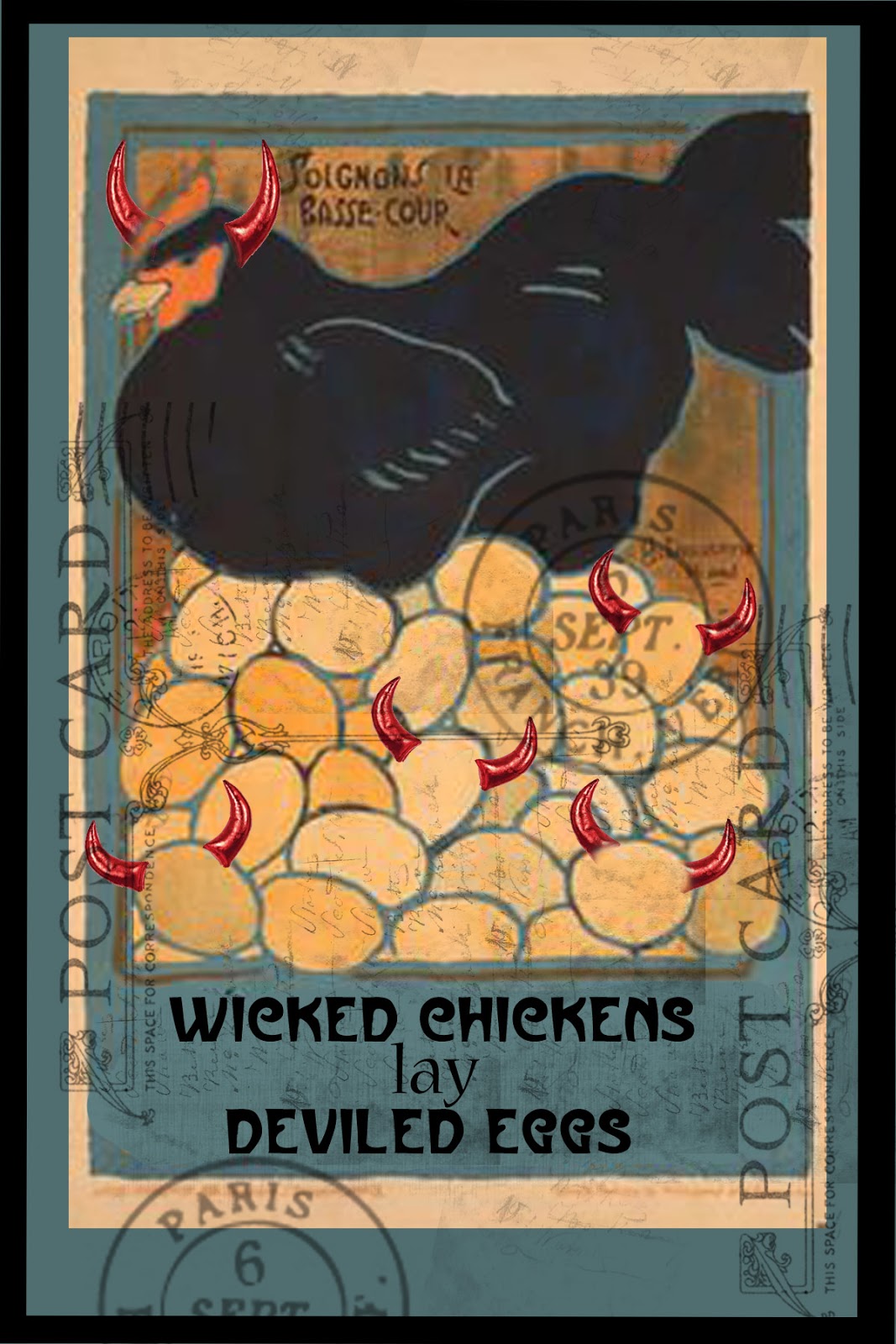
Been a long time since I've played here...or played at all. Still lots going on here, both physical and emotional, but we are looking for peace and joy wherever we can find it
I really enjoyed making this card, it was like a meditation, looking for the elements on Google Images (SO many!), arranging them and then painting with PS brushes.
Thanks for visiting.
Sunday, February 5, 2017
Sunday, October 9, 2016
Lions and Tigers and Bears
Oh my...
Lion, hats and background from the Midnight Reverie collab from Mischief Circus; the rest from my stash.
I love polar bears!
Saturday, October 1, 2016
SPA--Wizards
AHHHH...Halloween
The boy is from a cabinet card, the hat by Denis Polyakov at Deviant Art, the background from Tumblefish and the rest from Google and my stash.
Thursday, September 29, 2016
Life Takes a Detour
Recently our lives have taken a turn that we did not expect.
there is sadness...and fear...
and hope ...and faith in God's plan.
~
We have endless love,
our family and our friends
and more prayers than we ever expected.
~
a poor attempt to let some of it out...but the first real piece of art from my soul in a long time.
Sunday, August 21, 2016
Sunday, August 7, 2016
Tuesday, August 2, 2016
Monday, August 1, 2016
Take a Word--Games
The Game of the Goose
The Royal game of Goose
The game of Goose was Invented by Francesco de Medici and was taken quite seriously amoung adult players. Now it is seen as a classic children's race game, you throw the dice and move gradually into the centre of the board with various 'miss a turn' obstacles along the way. the first one to the middle is the winner. The game is very good for younger children, this is all about luck rather than strategy. It makes a great present for kids who already have snakes and ladders.
The rules to Goose
Il nuovo et piacevole gioco dell ocha
(The new and enjoyable game of the goose)
Engraving published by Lucchino Gargano in 1598 with the game rules in the centre and pictures of fools in each corner.
(The new and enjoyable game of the goose)
Engraving published by Lucchino Gargano in 1598 with the game rules in the centre and pictures of fools in each corner.
The Royal game of Goose
The game of Goose was Invented by Francesco de Medici and was taken quite seriously amoung adult players. Now it is seen as a classic children's race game, you throw the dice and move gradually into the centre of the board with various 'miss a turn' obstacles along the way. the first one to the middle is the winner. The game is very good for younger children, this is all about luck rather than strategy. It makes a great present for kids who already have snakes and ladders.
The rules to Goose
A counter for each player
The object of the game is to be the first person to get to the end of the journey.
To Play
The youngest player goes first. Roll the dice and move your counter one square for each spot on the dice. Then it is the next player's turn unless one of these things happens:
If you throw a 3 on your first turn you can move straight to square 26.
If your counter lands on a Goose square you can move again without throwing the dice. You move the number of spots of your original throw. For example throw a 4, land on a Goose, move four squares forward again.
If you land on the Bridge, square 6, miss a turn while you pay the toll.
If you land on the Inn, square 19, miss a turn while you stop for some tasty dinner.
If you you land on the Well, square 31, make a wish and miss three turns. If another player passes you before your three turns are up you can start moving again on your next go.
If you land on the Labyrinth, square 42, you will get lost in the maze and have to move back to square 37.
If you land on the Prison, square 52, you will have to miss three turns while you are behind bars. If another player passes you before your three turns are up you can start moving again on your next go.
If you land on Dead, square 58, you have to go back to square 1 and start all over again!
Players may not share squares, so if your dice roll would land you on an occupied square you will have to stay where you are until it is your turn again.
To win you must reach square 63 exactly. If your dice roll is more than you need then you move in to square 63 and then bounce back out again, each spot on the dice is still one sqaure in this move. If you land on any of the special squares while you are doing this then you must follow the normal instructions.
When you land on square 63 exactly you are the winner!
Sunday, July 31, 2016
Friday, July 29, 2016
In the Style of Alfredo Palermo
for Digitalmania:
Whether in powerful red, vibrant orange, or gentle green, Alfredo Palmero’s Meninas and their charming colours have an almost hypnotic effect. In his large-format portraits, tradition meets modernity, and abstraction collides with the paintings of the old masters. It is no coincidence that his series is named after the famous painting “Las Meninas” by Diego Velázquez, one of the most important portrait painters of the Spanish Baroque. Palmero shares Velázquez’s love for detail as well as his unique ability to express his model’s personality in just a few brushstrokes.
Palmero created his Meninas as symbols of femininity, allegories for the mysteries of women and their role in society. We seem to recognise typical female attributes in their expressive poses: Gentleness, pride, and sensuality are almost tangible. Each embodies a different disposition and symbolises a different allure – one that is reflected in the background colours. It is not only the exquisite colours of Palmero’s portraits that stand out, but also the pieces’ compositional nature. While the upper halves of the images follow a realistic, figurative style of painting, the bottom halves lose themselves in complete abstraction. His use of expressive brushstrokes to portray the Meninas’ opulent dresses is almost reminiscent of a sketch by Miró. This contrast-rich relationship creates the distinctive charm of Palmero’s works, whose beauty is matched only by that of the Meninas themselves.
You can view some of the Meninas here.
I, of course, put my own mark on his style...
Lady in Red
Lady of the Heavens
Lady of the Feathers
Whether in powerful red, vibrant orange, or gentle green, Alfredo Palmero’s Meninas and their charming colours have an almost hypnotic effect. In his large-format portraits, tradition meets modernity, and abstraction collides with the paintings of the old masters. It is no coincidence that his series is named after the famous painting “Las Meninas” by Diego Velázquez, one of the most important portrait painters of the Spanish Baroque. Palmero shares Velázquez’s love for detail as well as his unique ability to express his model’s personality in just a few brushstrokes.
Palmero created his Meninas as symbols of femininity, allegories for the mysteries of women and their role in society. We seem to recognise typical female attributes in their expressive poses: Gentleness, pride, and sensuality are almost tangible. Each embodies a different disposition and symbolises a different allure – one that is reflected in the background colours. It is not only the exquisite colours of Palmero’s portraits that stand out, but also the pieces’ compositional nature. While the upper halves of the images follow a realistic, figurative style of painting, the bottom halves lose themselves in complete abstraction. His use of expressive brushstrokes to portray the Meninas’ opulent dresses is almost reminiscent of a sketch by Miró. This contrast-rich relationship creates the distinctive charm of Palmero’s works, whose beauty is matched only by that of the Meninas themselves.
You can view some of the Meninas here.
I, of course, put my own mark on his style...
Lady in Red
Lady of the Heavens
Lady of the Feathers
Wednesday, July 13, 2016
Sunday, July 10, 2016
SPA--At the Beach
Jones Beach, Summer 1936...where there was an unusual infestation of octopus.
Vinyage Beach poster found on Google, altered with textures, Photoshop brushes and tentacles.
Friday, July 8, 2016
Thursday, July 7, 2016
Three Muses--Music
Music is a moral law.
It gives soul to the universe,
wings to the mind,
flight to the imagination,
and charm and gaiety to life and to everything.
~Plato~
Wednesday, July 6, 2016
Take a Word--Time
The only reason for time is so that everything doesn't happen at once.
~Albert Einstein~
Clocks from my stash, all other elements (altered) are from the Mischief Circus collab kit "I'm With the Band"
Sunday, July 3, 2016
SPA--Audrey Hepburn
I believe in pink.
I believe that laughing is the best calorie burner.
I believe in kissing, kissing a lot.
I believe in being strong when everything seems to be going wrong.
I believe that happy girls are the prettiest girls.
I believe that tomorrow is another day and I believe in miracles.
Audrey Hepburn
Saturday, July 2, 2016
Sunday, June 26, 2016
SPA-- Titanic
Memories of a Disaster
We had the opportunity to view the Exhibit of artifacts recovered from the Titanic when it was in Baltimore several years ago. It was very moving, and also very eerie seeing items that had actually been on the ship and in the ocean for so long.
all images from Google
Wednesday, June 22, 2016
In the Style of Loui Jover
Queensland, Australia-based artist Loui Jover creates striking artworks by using pen and dripping ink on pages of vintage books. While many of his pieces show the complicated emotions on a woman's face, Jover is equally adept at creating romantic love scenes of faceless silhouettes. Of course, his most powerful works are the ones where the ink drops in just the right places, at times resembling a small but noticeably stream of tears that silently fall on a distressed woman's face.
Jover creates his pen and ink drawings on vintage book paper because he believes that it adds to the fragility of the works, saying "the wind may blow them away at any moment." Also, juxtaposing the stark black lines with the intricate printed words offers "a strange fusion and depth that seems to give the images a kind of 'meaning' and back story, even though unconnected in a contrived way."
view his work here or google him on Google Images to see his work.
Digital Mania has used Jover for our inspiration many times, and here he is again for us to play with and enjoy.
image of Karen Blixen ("Out of Africa") found in Pinterest, New York times page from Google.
Subscribe to:
Posts (Atom)